

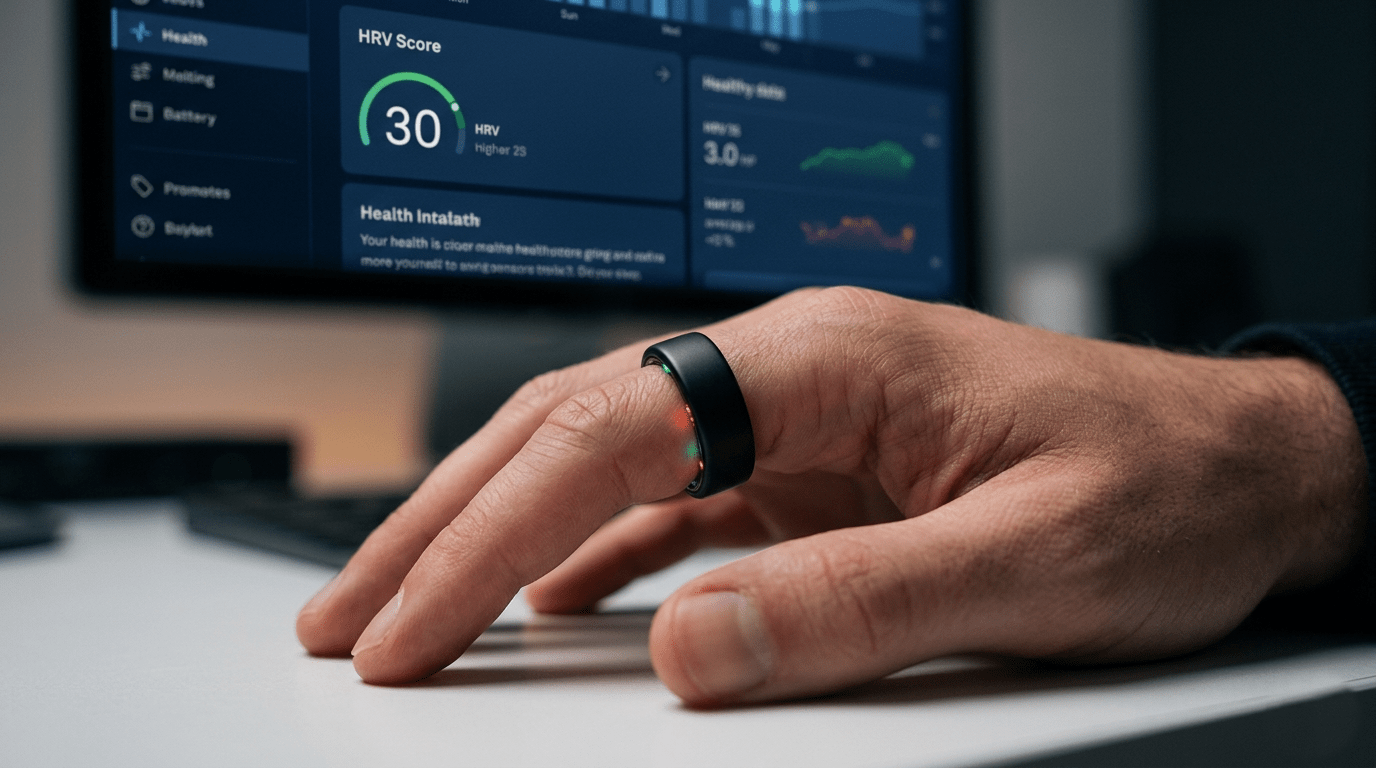
The End of the Glance: Why 2026 is the Year of Screenless Tech
For the past decade, our wrists have served as secondary billboards for our digital lives. But as we cross into mid-2026, a profound sense of “Screen Fatigue” has reached a breaking point. The constant flickering of notifications and the Pavlovian urge to check a glowing rectangle for “wellness” stats have become antithetical to actual well-being. This is the year we finally stop checking and start feeling.
The data confirms this cultural exhaustion. According to the latest IDC Worldwide Quarterly Wearable Device Tracker, shipments of traditional smartwatches have seen their first significant year-over-year plateau, while screenless wearables—including smart rings and haptic bands—are outperforming the category with a staggering 25% growth rate. Consumers are voting with their wallets for a future that doesn’t demand their visual attention.
From Notification to Intuition
We are witnessing the rise of “Invisible Integration.” Tech is no longer a peripheral we interact with; it is becoming biological infrastructure that operates in the background. Instead of a vibrant OLED display telling you that you’re stressed, new-age devices use ambient haptics and AI-driven voice guidance to nudge you toward a deep breath or a posture correction before you even realize you need it.
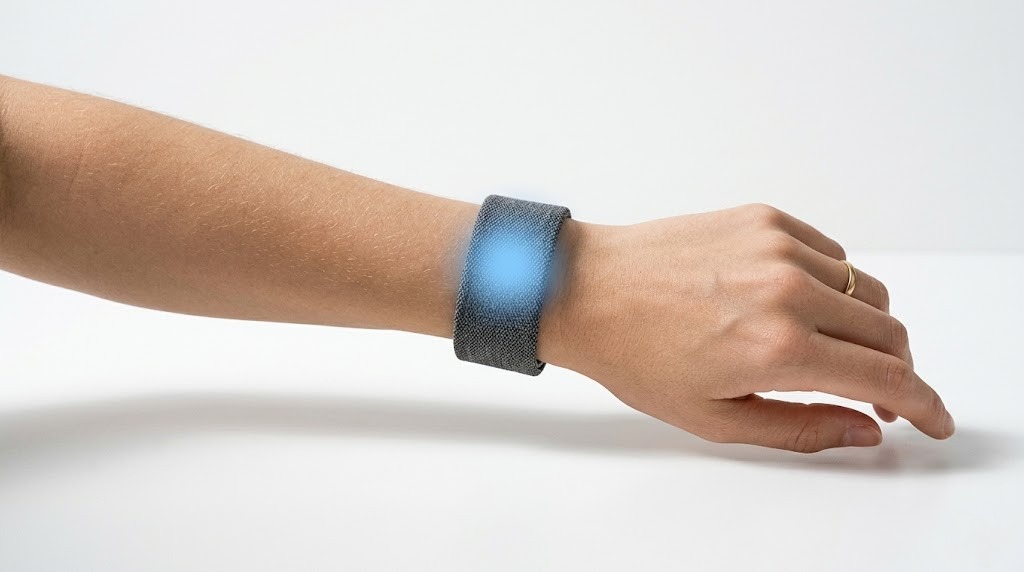
The primary catalyst for this shift was the launch of the Luna Band at CES 2026. Eschewing a screen entirely, the Luna Band utilizes a research-grade optical sensor array and the LifeOS AI engine to provide real-time, voice-led coaching. It doesn’t show you a chart of your heart rate; it speaks to you through your earbuds, offering context-aware guidance on recovery and circadian alignment. It is tech that whispers rather than screams.
As we move deeper into this screenless revolution, this post will explore the three pillars of the “Invisible” movement:
- The Smart Ring Dominance: Why the finger, not the wrist, is the new hub for high-fidelity biometric data.
- Neural Interfaces: How haptic focus cues are replacing “Do Not Disturb” modes to anchor our attention.
- The Privacy Paradox: How local AI processing is securing our most intimate biological data in an era of constant sensing.
The Fingertip Advantage: Why Smart Rings Are the New Gold Standard
While the wrist has long been the default real estate for wearables, the medical community has long recognized that the finger is a far more reliable site for high-fidelity biometric data. With the official launch of the Oura Ring Gen 4 in India, priced at ₹28,900, the conversation around wearable precision has shifted from “convenience” to “clinical-grade accuracy.”
“This demand for high-fidelity hardware is a trend we’ve seen across the board this year; even in the smartphone market, users are prioritizing performance-to-value ratios, as seen with the [record-breaking launch of the Realme P1 5G series].”
The Science of Peripheral Perfusion
The shift toward smart rings isn’t just about aesthetics; it’s about vascular density. The arteries in your fingers are closer to the surface than those in your wrist, which is crowded with bone, tendon, and muscle. This “Fingertip Advantage” allows for a significantly higher signal-to-noise ratio when measuring Heart Rate Variability (HRV) and blood oxygen saturation (SpO2).
Because the skin on the finger is thinner and the blood flow more accessible, rings can capture pulse wave data with less interference from movement—a common “noise” issue that plagues smartwatches during sleep or high-intensity activity.
The Sensor Stack: Advanced PPG and Beyond
The Oura Gen 4 utilizes an upgraded Photoplethysmography (PPG) system. This technology works by emitting light (typically infrared and green) into the tissue and measuring the light reflected back to determine blood volume changes.
- Metabolic Health Tracking: By monitoring the nuances of the pulse wave, the Gen 4 identifies subtle shifts in resting heart rate and body temperature. These are leading indicators of metabolic stress or the onset of illness, often flagging a fever hours before symptoms manifest.
- Nervous System Recovery: The ring’s ability to track HRV during the “deep sleep” phase provides a window into the Autonomic Nervous System (ANS). A high HRV indicates a dominant Parasympathetic (rest-and-digest) state, while a suppressed HRV signals that the Sympathetic (fight-or-flight) system is still overactive.
- Sleep Architecture: The Gen 4 leverages multi-wavelength LED sensors to map sleep stages with an accuracy that rivals basic polysomnography (PSG) labs. It tracks the “efficiency” of your sleep rather than just the duration, providing a “Readiness Score” that dictates whether you should push for a PR or prioritize recovery.
Expert Note: The Oura Gen 4’s ₹28,900 price point positions it as a premium health investment. However, for users seeking to optimize their circadian rhythm and nervous system health without the distraction of a screen, the engineering trade-off is clear: you are paying for data integrity over digital fluff.
“While ₹28,900 is a significant investment, it reflects a broader move toward ‘health-first’ spending. Many are choosing to invest in these tools to ensure they have the stamina for peak experiences, like [Chopta trek].”
Beyond Biometrics: The Dawn of Neural Tracking
If 2024 was about counting steps and 2025 was about tracking sleep, 2026 is officially the year we began mapping the mind. We have moved past the “Mechanical Era” of health tech—where we obsessed over physical movement—and entered the Cognitive Era. The “old-school” step counter has become a relic of a simpler time; after all, hitting 10,000 steps means very little if your brain is operating in a state of chronic cognitive fragmentation.
The New Form Factors: From Wrists to Temples
The most significant engineering breakthrough of 2026 isn’t on the finger or the wrist, but at the hairline. We are seeing a surge in ultra-thin adhesive temple patches and haptic-integrated headbands designed for 24/7 wear. These devices utilize medical-grade dry electrodes to conduct real-time Electroencephalography (EEG), monitoring the electrical fluctuations of the brain with surgical precision.
By focusing on the brain’s “Big Three” wave states, these trackers provide a dashboard for the subconscious:
- Alpha Waves (8–12 Hz): Monitoring the “Flow State”—that elusive bridge between quiet focus and peak productivity.
- Beta Waves (13–30 Hz): Tracking active thinking and logical processing, but more importantly, identifying when high-frequency Beta activity turns into anxiety-driven noise.
- Theta Waves (4–8 Hz): Capturing the “twilight” state of deep creativity and REM-adjacent recovery.
Detecting the “Invisible” Burnout
The true innovation of neural tracking lies in its ability to predict Cognitive Fatigue before it manifests as physical exhaustion. Traditional wearables tell you that you’re tired because your heart rate is elevated or your sleep was poor; neural interfaces tell you that you’re burned out because your Neural Resource Efficiency is plummeting.
These devices detect “Mental Overload” by measuring the delta between your intended focus and your actual brain state. If the device senses a spike in high-beta activity paired with a drop in alpha coherence, it doesn’t wait for you to crash. Instead, it utilizes subtle haptic pulses—gentle rhythmic vibrations against the mastoid bone—to “pace” your brain back into a calmer state.
“The cost of ignoring these neural warning signs is steep. Without proper pacing and neural recovery, the brain enters a state of high-stress fragmentation, which can mimic the [cognitive breakdown seen during 48-hour sleep deprivation].”
The 2026 Shift: We are no longer tracking how much we move; we are tracking how much we think. In this new paradigm, a “healthy day” is defined by cognitive clarity and emotional resilience, not just a closed ring on a screen.
My Body, My Data: The Privacy-First Era
In the early days of wearables, we unknowingly entered into a “Faustian bargain”: in exchange for health insights, we surrendered our most intimate biological signatures to centralized cloud servers. But by 2026, the tide has turned. The rise of screenless, “invisible” tech has been accompanied by an equally silent revolution in Data Sovereignty.
The fear of a “biological data breach”—where your stress levels, sleep cycles, or neural patterns could be sold to insurers or leaked to advertisers—has shifted from a paranoid theory to a primary consumer concern. In response, the industry has adopted a “Privacy by Design” framework that makes the cloud an option, not a requirement.
The Rise of the “Personal Edge”
Leading devices of 2026, most notably the Luna Band, have abandoned the old model of “upload and analyze.” Instead, they utilize On-Device AI. The sophisticated algorithms required to interpret complex PPG and neural signals now live within the wearable’s own silicon. Your raw biometric data—every heartbeat and brainwave—is processed locally on the hardware. What leaves the device isn’t your data, but the insight (e.g., “Recovery is 85%”).
Federated Learning: Collective Intelligence, Individual Privacy
To keep these devices smart without harvesting user identities, the 2026 security standard relies on Federated Learning. This allows the AI models to improve by learning from the entire user base without the raw data ever leaving the individual devices.
- Local Updates: Your device learns your specific physiological baselines locally.
- Encrypted Summaries: The device sends a “mathematical summary” of what it learned to the manufacturer—never the personal data itself.
- Global Improvement: The central model is updated based on these anonymous summaries and sent back to all devices.
Security as a Feature, Not a Layer
This shift represents a fundamental change in the health-tech power dynamic. In 2026, biometric encryption ensures that your “Digital Twin”—the algorithmic representation of your health—is accessible only via your unique neural or haptic signature.
By removing the screen, we’ve removed the most common vector for visual privacy leaks; by moving to Local AI, we’ve removed the risk of the “Centralized Honeypot.” You are no longer the product; you are the sole proprietor of your biological identity. You can finally embrace the future of health optimization with the peace of mind that your pulse belongs to you, and you alone.
The New Metric of Success: Decoding Your Nervous System
In the screenless era, the definition of a “good workout” has undergone a radical transformation. We’ve moved away from the 2020s obsession with “closing rings” and burning calories at all costs. In 2026, the elite metric isn’t how hard you can push, but how efficiently you can recover. We aren’t training harder; we are recovering smarter.
Without a screen to distract you with vanity metrics, your wearable focuses entirely on the state of your Autonomic Nervous System (ANS). This data is distilled into a single, actionable Readiness Score, derived from a sophisticated interplay of three key pillars:
1. HRV: Your Internal Compass
Heart Rate Variability (HRV) remains the gold standard for measuring stress resilience. High variability indicates a flexible, “ready” nervous system, while low variability suggests you are stuck in a sympathetic “fight-or-flight” state. In 2026, your device uses haptic nudges to alert you when your HRV trends downward, suggesting a “Deload Day” before you even feel the first signs of fatigue.
2. Skin Temperature: The Early Warning System
By tracking minute fluctuations in skin temperature—down to $0.1^{\circ}C$—modern sensors can detect more than just a fever. Subtle temperature rises during sleep often signal that your body is diverting resources to repair tissue or fight off a brewing infection. If your temperature is elevated, your Readiness Score will pivot your daily goal from “High Intensity” to “Active Recovery.”
3. Sleep Efficiency: Quality Over Chronology
We no longer just track hours in bed. Sleep Efficiency measures the ratio of restorative (Deep and REM) sleep to total time spent asleep. A screenless device like the Luna Band interprets a high-efficiency night as a green light for cognitive and physical strain, whereas a fragmented sleep cycle triggers a recommendation for breathwork or early-evening wind-down routines.
Turning Data Into Action
The beauty of the 2026 ecosystem is that you don’t need to be a data scientist to improve your health. Your “Readiness” acts as a daily biological budget:
- High Readiness (85+): Your nervous system is primed. This is the day for high-intensity intervals or complex cognitive tasks.
- Optimal Readiness (70-84): You are balanced. Maintain your current routine and focus on consistency.
- Low Readiness (<70): Your “Biological Bank Account” is overdrawn. The tech will guide you toward restorative yoga, zone 2 walking, or increased hydration.
By listening to these subtle haptic and audio cues, you stop fighting against your biology and start flowing with it. Wellness is no longer a destination you’re chasing on a screen; it’s a state of being you feel in your body.
Conclusion: Rising Above the Noise
The shift we are witnessing in 2026 is more than a mere change in hardware; it is a fundamental recalibration of our relationship with technology. We have moved past the era of the “digital leash,” where success was measured by arbitrary step counts and the constant ping of wrist-bound notifications. Today, the wearable revolution is defined by total wellness—a holistic, quiet, and deeply personal integration of health and life.
As I look at where we are heading, I’m reminded of a morning I spent standing on a peak in Nainital. I was looking down at an endless, fluffy layer of white clouds that completely blanketed the valley below. From that height, all the noise, the frantic movement, and the distractions of the world beneath that white veil simply vanished. There was only silence and a profound sense of perspective.

“Whether you are navigating the intricate data of a smart ring or the winding, high-altitude roads of [Spiti Valley], the goal is the same: clarity, presence, and a deep connection to the world around you.”
That is exactly what 2026 health tech is striving to provide. By removing the screens and the constant visual clutter, these new devices allow us to rise above the “digital fog” of our daily lives. They give us that same high-level clarity, filtering out the chaos so we can focus on the signals that truly matter—our recovery, our mental state, and our long-term vitality.
We are finally moving toward a future where our gadgets no longer demand our attention; instead, they protect it. In 2026, the best tech doesn’t distract you—it gives you the clarity to see the path ahead.