

Picture this: It’s 2:00 PM in late June. You’re sitting in a stationary SUV on Manali’s Mall Road, the thermometer hitting a record-breaking high, and the air is a thick soup of diesel fumes and fried maggi. Outside your window, a chorus of aggressive honking competes with the distorted bass of a nearby tourist’s Bluetooth speaker. You paid three times the usual rate for this cab just to move four inches in forty minutes.
In this moment, as you watch a sea of selfie sticks bobbing through the heat haze, you feel it: a profoundly modern sense of “Manali Meltdown”. It’s that specific brand of claustrophobia that happens when “getting away from it all” looks exactly like the rush hour you left behind, just with more expensive woolens.
The Antithesis: Finding the Tirthan Pulse
Now, take a breath. Let’s pivot.
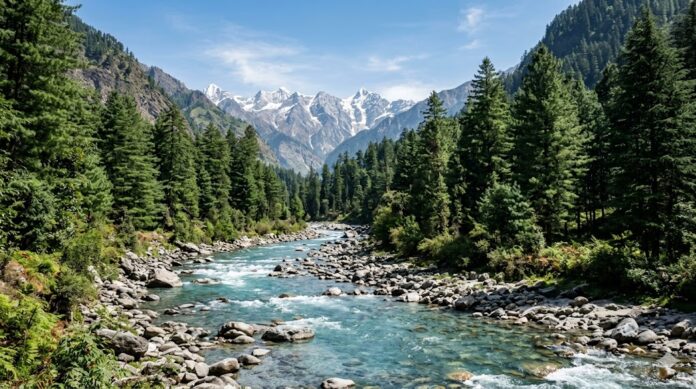
Imagine, instead, a silence so heavy you can actually hear the heartbeat of the mountain. You’re standing on a moss-slicked stone in the Tirthan Valley. There is no honking here—only the rhythmic, icy rush of the Tirthan River, its water a translucent, glacial blue that looks like shattered sapphire.
The air doesn’t smell like exhaust; it smells of damp earth and the sharp, medicinal sweetness of towering pine trees. Here, the “traffic” is a stray Himalayan whistling thrush darting through the canopy. It’s a place that doesn’t demand your attention; it simply restores it.
We get it. You’re tired of the “Top 10” lists that lead everyone to the same crowded balcony. You deserve a rescue mission, not just a vacation. This guide is your map out of the noise and into the stillness of the “Un-Manali.”
What This Guide Covers
We aren’t just looking for a pin on a map; we’re looking for a state of mind. In the following sections, we’ll dive into:
- Finding Stillness: The secret hamlets beyond Gushaini where the crowds literally cannot follow.
- The ‘Invisible’ Tech: How to stay connected using minimal, discreet gear that ensures your “Out of Office” actually means something.
- The ‘Un-Manali’ Mandate: Why choosing the path of least resistance (and fewest Instagram tags) is the only way to survive Summer 2026 with your sanity intact.
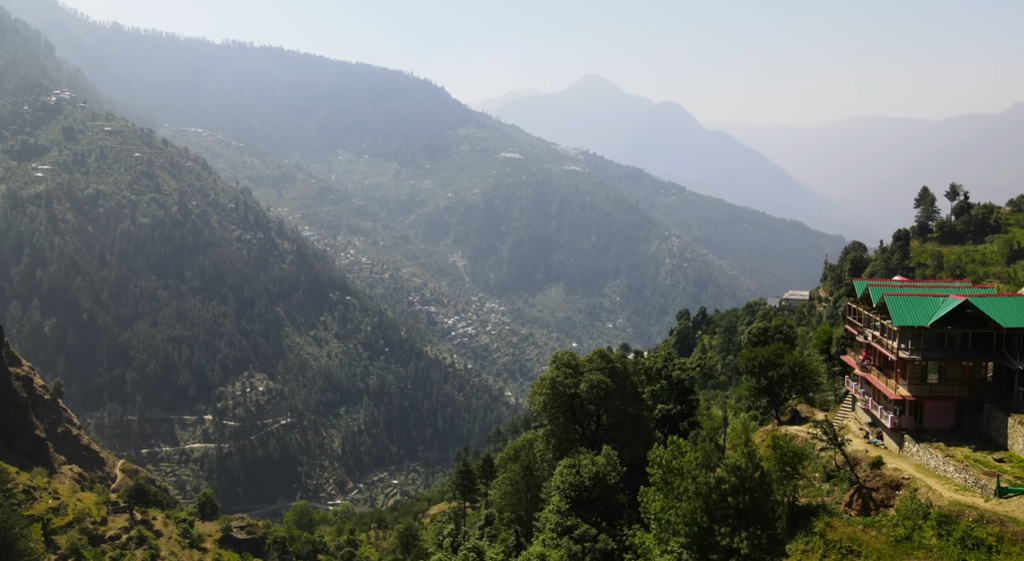
The Tirthan Valley doesn’t just look different from the rest of the world; it feels like a glitch in the frantic timeline of 2026. While the rest of the mountain range is buckling under the weight of glass-fronted hotels and neon signs, Tirthan remains an atmospheric secret, protected not by gates, but by its own stubborn insistence on being still.
The Frequency of the Water
The soul of the valley is, of course, the river itself. To sit on its bank is to witness a clarity that feels almost prehistoric. The Tirthan isn’t the muddy brown of a monsoon-swollen stream or the dull grey of a silted canal; it is a shimmering, glacial blue, so transparent that the riverbed stones—washed smooth into shades of charcoal and bone—look like they are resting under a layer of polished glass.
But it’s the sound that truly anchors you. In any other context, a rush this powerful would be loud, but here, the roar of the water isn’t noise, but a frequency that quiets the mind. It functions as a natural white noise that drowns out the internal chatter of notifications and deadlines, replacing the “busy-ness” of the brain with a singular, liquid hum. After an hour by the bank, your pulse inevitably slows to match the rhythm of the current.
“The sound of the Tirthan River isn’t just noise; it’s a frequency that resets the nervous system. It offers a natural form of peace that many seek in more hubs, such as [Andaman].”
Architecture of Absence
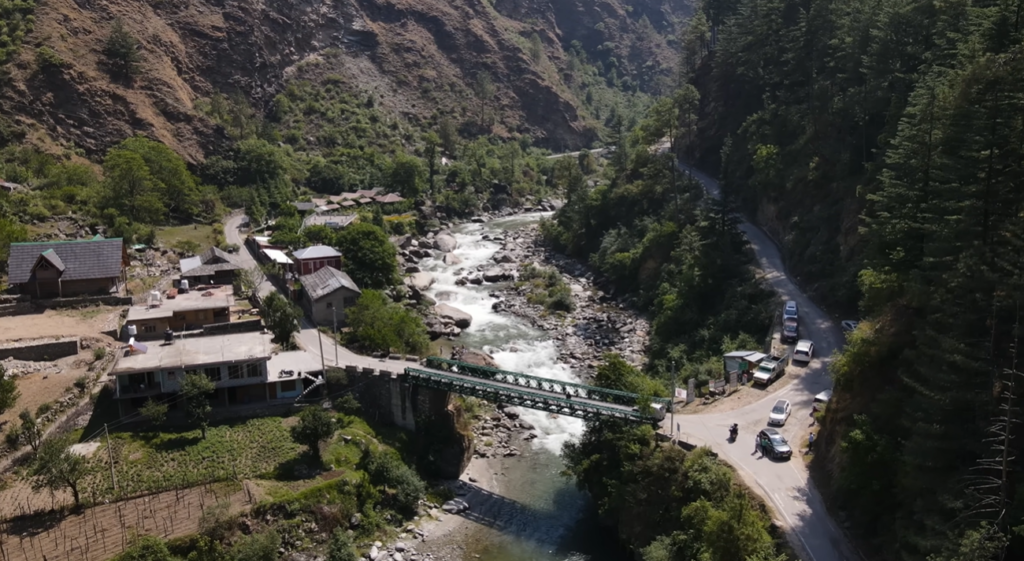
The landscape here hasn’t been conquered; it’s being shared. Instead of the concrete high-rises that now scar most Himalayan skylines, you find simple eco-cottages tucked into the folds of the hills. Built from cedarwood and local stone, these dwellings aren’t “resorts” in the modern, flashy sense. They are merely wooden anchors in the forest, designed to let the outside in.
- The Scent: Inside, the air is thick with the resinous perfume of old wood and sun-warmed needles.
- The View: Windows aren’t framed for “the gram,” but to watch the way the morning mist clings to the deodar trees.
- The Impact: These structures feel temporary, as if the forest has allowed them to stay for a while, provided they don’t make too much of a fuss.
The New Definition of Luxury
In May 2026, we have reached a tipping point where the rarest commodity on earth isn’t gold or high-speed data—it is silence.
True luxury is no longer found in a five-star lobby with a pressurized air system; it is found in the “under-visited” stillness of a Tirthan riverside morning, where the only thing demanding your attention is the cold spray of the water on your skin. To be here, disconnected from the grid and reconnected to the earth, is the ultimate flex. It is a quiet rebellion against a loud world, proving that the greatest journey isn’t how far you go, but how deeply you can finally sit still.
To truly understand the Tirthan Valley, you have to stop looking at the mountains and start living within them.
Most travelers are conditioned to seek out the “Viewpoint”—a concrete platform crowded with elbowing tourists, all vying for the same square inch of railing to capture a panoramic shot that thousand of others already have. But in the Tirthan highlands, the perspective isn’t something you visit for fifteen minutes before heading back to the car. It is the very air you breathe.
The Geography of Solitude
When you stay in the higher reaches—perhaps a sun-bleached wooden homestay perched above Gushaini or tucked away in the steep folds near Jibhi—the world undergoes a physical transformation. You aren’t just at a higher altitude; you are in a different dimension of clarity.
Waking up here is a surreal, cinematic experience. You step onto a creaky timber balcony and find that the valley you walked through yesterday has vanished. In its place is a vast, silent ocean of undulating white clouds, thick and cotton-like, blanketing everything below. You are standing on a literal island in the sky.
Rising Above the Mental Noise
There is a profound sensory isolation that comes with living above the cloud line. Below that white veil is the world of “shoulds” and “musts”—the pings of May 2026’s digital demands, the heat, and the frantic pace of the lowlands. But up here, the atmosphere acts as a physical filter.
- The Sound of High Altitude: At this elevation, the silence has a texture. It’s not the absence of noise, but a crisp, thin stillness where the only sound is the occasional creak of a cedar branch or the distant, muffled ring of a mountain goat’s bell.
- The Visual Sharpness: Without the haze of the valley floor, the light is different. It’s piercingly bright, making the emerald needles of the deodar trees look like they’ve been rendered in high definition.
- The Emotional Shift: Looking down at the clouds creates a psychological distance. It becomes impossible to worry about a cluttered inbox when your entire world has been reduced to a wooden porch, a steaming mug of tea, and a horizon that doesn’t end.
This is the “Un-Manali” epiphany: that peace isn’t something you find by looking harder; it’s something that happens naturally when you rise above the mental noise of daily life. You realize that while everyone else is fighting for a view, you are simply existing within one.
The Gear of Presence: Embracing ‘Invisible Tech’
In an era where “travel gear” often means a tangled web of charging cables and glowing glass rectangles, the Tirthan Valley demands a different kit. To truly immerse yourself in the “Un-Manali,” you need tools that protect your experience rather than distract from it. We call this Invisible Tech—gear that works in the background so you can stay in the foreground.
The Analog Anchors
True reliability doesn’t need a firmware update. When you’re navigating the uneven, pine-needle-slick trails of the Great Himalayan National Park, your most important tech is the kind that has been perfected over decades:
- The Weathered Pack: Forget the pristine, high-gloss nylon bags seen in airport lounges. The ideal Tirthan companion is a robust, 20-year-old canvas or leather backpack. It’s scuffed, faded by the sun, and carries the ghost of a dozen other journeys. Its value isn’t in its features, but in its soul—it’s a silent witness to your movement.
- The Broken-In Boots: You don’t want “smart” soles; you want leather boots that have molded to the specific architecture of your feet. Scuffed, darkened by river water, and perfectly supple, they are the literal bridge between you and the mountain. They don’t demand a “glance” to see if they’re working; they just work.
The Silent Monitor: Oura Ring 4
However, 2026 has gifted us one piece of truly transformative “Invisible” technology: the Oura Ring 4.
Unlike a smartwatch that vibrates with every spam email or demands you “close your rings” while you’re trying to meditate by a waterfall, the Oura 4 is a matte-titanium whisper. There is no screen. No blue light. No interruptions.
“In 2026, the best tech is the kind you don’t have to look at. Whether it’s a pair of broken-in leather boots or a [smart ring that tracks your neural recovery], your gear should protect your experience, not distract from it.”
Instead, it sits flush against your skin, using its upgraded Smart Sensing platform to silently track your stamina and nervous system recovery. While you are busy listening to the frequency of the river, it is busy measuring your Heart Rate Variability (HRV) and sleep quality, translating the valley’s peace into hard data on how well your body is actually resetting. It doesn’t ask for your attention; it simply provides a mirror to your recovery when you’re ready to look.
Functional Integration vs. Constant Distraction
This is the shift from distraction to integration. Old-style tech demands a constant glance— a persistent tether to the digital world that keeps you half-present in paradise. Invisible Tech does the opposite: it provides the safety and health insights you need while allowing you to keep your eyes on the shifting clouds and your ears on the wind.
The Ethical Pivot: Travel as an Act of Resistance
By 2026, the “checklist” approach to travel hasn’t just become boring; it’s become destructive. The traditional model—rushing into a valley, snapping a photo, and leaving a trail of plastic and carbon in your wake—is what led to the Manali Meltdown” we’re all trying to escape. Choosing the Tirthan Valley isn’t just a pivot toward peace; it’s a conscious rejection of the extraction economy.
When you choose the Un-Manali, your presence becomes a form of protection.
While popular destinations often buckle under the weight of summer crowds, finding a place that maintains its soul is a rare gift—much like the quiet resilience required to [complete the Tungnath and Chandrashila trek in Chopta] during the peak season.
The Power of Slow Travel
Sustainability isn’t a buzzword here; it’s the only way the valley survives. This guide advocates for Slow Travel—the radical idea of staying in one place for a week instead of hitting five “destinations” in three days.
- The Local Table: Instead of frozen, mass-distributed food, your sustenance comes from the river and the immediate soil. Eating locally sourced brown trout and organic vegetables grown in the backyard of your homestay isn’t just a culinary experience —it’s a direct investment in the valley’s self-sufficiency.
- The Human Element: When you hire a local guide from Gushaini to show you the hidden meadows of the Great Himalayan National Park (GHNP), you aren’t just paying for a map. You are supporting an ancestral knowledge system that views the forest as a deity, not a commodity.
Rushing through the mountains is a mistake that leads to physical and mental burnout. True travel requires a clear mind and a rested body; ignoring this leads to the same [cognitive breakdown seen in 48-hour sleep deprivation].”
Respecting the Fragile
Popular hubs have treated the Himalayas like an infinite resource, leading to the collapse of local infrastructure and the erosion of mountain culture. Tirthan is a fragile eco-system that still has a fighting chance.
Every day you spend sitting by the river—rather than idling in a traffic jam—you are making an ethical choice. You are choosing a path that values carbon-neutral exploration over high-impact tourism. In 2026, where you spend your time (and your money) is the most powerful vote you can cast.
Choosing Tirthan isn’t just about how you spend your summer; it’s about ensuring there is still a mountain to return to in 2036. It’s not just a vacation—it’s an act of respect.
The Final Verdict:
As we look toward the heat of Summer 2026, the crossroads is clear. The choice between the Manali Meltdown and the Tirthan Riverside Reset isn’t really about a pin on a map or a line item in a travel budget. It’s about a fundamental decision regarding your own internal state What do you actually want to feel?
You can choose the frantic, high-decibel energy of a destination that has grown too loud for its own echoes, or you can choose the “Un-Manali”—a place that offers the rare luxury of a nervous system recalibration. One offers a distraction; the other offers a return.
A Perspective from the Peak
This past month, I was standing on a peak in Nainital, looking down at an endless, fluffy layer of white clouds covering the entire valley. From that height, all the noise and the frantic movement of the world beneath that white blanket simply vanished.
Tirthan Valley in 2026 is trying to give us that same high-level perspective. It’s not just an escape from the heat; it’s an escape from the noise so you can finally see the big picture. The best views aren’t reserved for those with the biggest budgets, but for those with the patience to find the silence.
The river is waiting. The clouds are already forming their blanket. The only question left is whether you’re ready to rise above the noise.
Whether you are navigating the hidden riverside trails of Tirthan or the winding, high-altitude roads of [Spiti Valley], the goal is the same: to find the silence that lets you see the big picture.