

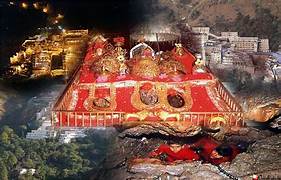
The clock strikes 10:00 PM, but in Katra, the day is only just beginning.
Step off the bus or out of your hotel, and the atmosphere hits you like a physical wave. The mid-May daytime heat—a brutal, draining force that keeps most sane people indoors—has finally broken, leaving behind a thick, humid night air that clings to your skin. Yet, nobody seems to care. The base camp is alive with a chaotic, beautiful energy. There is the steady, rhythmic chant of “Jai Mata Di” echoing from groups of pilgrims, the smell of sizzling hot paranthas from nearby dhabas, and the frantic bargaining of walkers picking up wooden trekking poles.
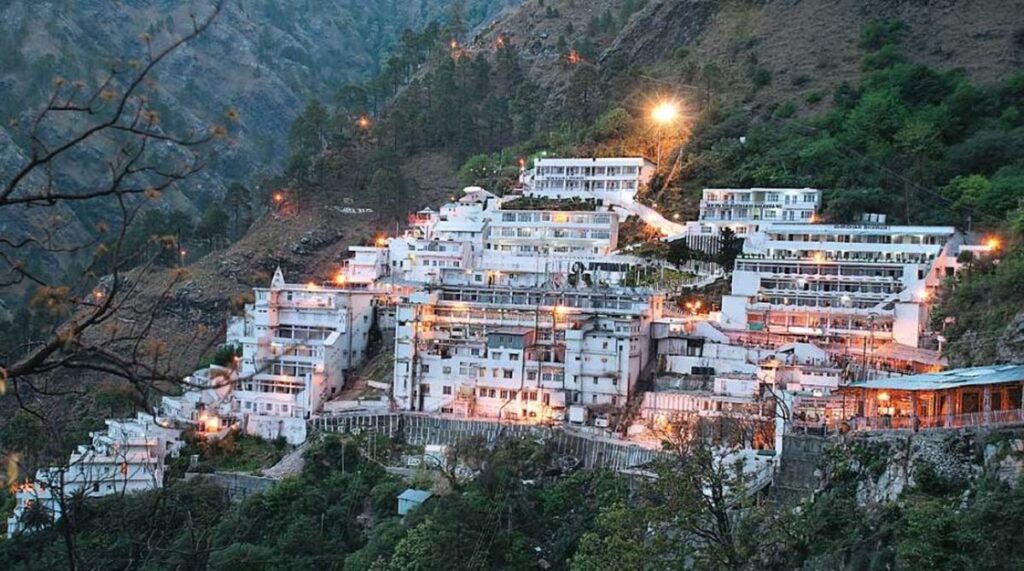
Look up, and the true scale of the journey reveals itself. Snaking through the pitch-black silhouette of the Trikuta Mountains is a brilliant, unbroken ribbon of amber light. It is the illuminated pathway to the Bhawan, glowing like a staircase to the stars.
To the uninitiated, the brochure makes it sound simple: a 13-kilometer walk to the shrine. But treating this trek as a casual uphill stroll is a massive mistake.
+-------------------+--------------------------------------------------+
| Distance (One Way)| ~13 km (Base camp to Bhawan)                     |
+-------------------+--------------------------------------------------+
| Full Circuit      | ~25 km to 28 km (Including Bhairon Nath shrine)  |
+-------------------+--------------------------------------------------+
| Terrain           | Continuous steep inclines, stairs, and concrete |
+-------------------+--------------------------------------------------+
What the numbers don’t tell you is the toll the terrain takes. This isn’t a flat city sidewalk; it is a relentless, steep incline on unforgiving concrete. By the time you complete the full 25-plus kilometer circuit—climbing up to the Bhawan, ascending further to the Bhairon Nath temple, and tracing your steps back down—your knees will burn, your calves will scream, and your mental fortitude will be tested to its absolute absolute limits. It is a grueling endurance test disguised as a spiritual journey.
Yet, as you tighten your shoelaces and step into the sea of pilgrims, fear gives way to pure adrenaline. There is a distinct, intoxicating excitement to starting a trek at midnight. While the rest of the world sleeps, you are embarking on a midnight conquest, using the cool cover of the dark to beat the scorching summer sun.
The mountain is calling, the path is lit, and the energy around you is infectious. It’s time to start walking.
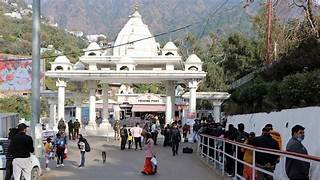
The transition from the chaotic energy of the Katra base camp to the official start of the trek at the Banganga Checkpoint is a sharp, instantaneous wake-up call. The moment you clear security, the flat ground vanishes. It is replaced by an immediate, uncompromising incline that forces your posture to shift forward, your heels to lift, and your lungs to expand.
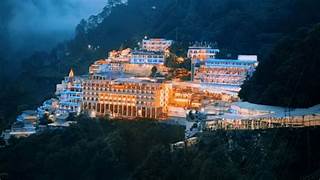
This is the first 6-kilometer leg to Adhkuwari, and it is where your journey truly begins.
Phase 1: The Gate and the RFID Protocol
Before your boots even hit the main track, you have to navigate the modern reality of the pilgrimage: the mandatory RFID card system.
- The Checkpoint Strategy: Keep your RFID card easily accessible—hung around your neck or clipped to an outer pocket—rather than buried deep in a backpack. The scanning gates at Banganga can bottle up quickly.
- Crowd Dynamics: Do not fight the crowd at the bottleneck. Maintain a calm, steady pocket of personal space. Move with the flow of the crowd, scan efficiently, and immediately step to the outer edges of the track once you clear the turnstiles to adjust your gear.
Phase 2: Finding Your Rhythm on the Paved Tracks
As you push past Banganga, the sensory environment wraps around you. The ground beneath you is a hard, grooved concrete pavement, designed to provide grip for both human feet and the hooves of ponies. It has a rough, unforgiving texture that transfers every ounce of impact straight back into your joints.
The air is thick, but it carries a powerful acoustic energy. The rhythmic cadence of “Jai Mata Di, Sab Bolo Jai Mata Di” rises and falls around you, functioning almost like a collective metronome.
The Calve-Saving Technique: > The most common rookie mistake on this initial stretch is attacking the incline with long, aggressive strides. This rapidly builds up lactic acid in your calves and hamstrings, guaranteeing exhaustion before you even reach the halfway mark.
Instead, shorten your stride. Take small, deliberate, half-steps. Keep your feet low to the ground and try to land mid-foot rather than entirely on your toes. Let the collective chant rhythm pace your breathing: inhale for two steps, exhale for two steps.
Phase 3: Passing Charan Paduka (~1.5 km)
Roughly 1.5 kilometers into the climb, the incline momentarily tapers off as you reach Charan Paduka, a revered site housing the imprints of the Goddess’s feet.
Distance Tracker:
[Banganga Checkpoint] ➔ 1.5 km ➔ [Charan Paduka] ➔ 4.5 km ➔ [Adhkuwari]
This area naturally creates a major bottleneck. Pilgrims slow down to bow, pray, and take blessings.
- Navigating the Bottleneck: If you do not intend to stop for darshan at Charan Paduka, split to the extreme outer edges of the pathway. The center is usually packed with stationary crowds.
- The Pony Protocol: This is also where the traffic of ponies and palanquins (palkis) intensifies. Always stay alert to the shouting of the handlers (“Khachhar, Khachhar!” or “Bhaiya, baayein ho jao!”). When you hear them, do not panic or cross the track dynamically; simply hug the mountain-side wall and stay stationary until they pass. Never stand on the valley-side edge when a animal is passing.
Phase 4: The Grunt to Adhkuwari
Past Charan Paduka, the trail throws its first major test at you: a series of steep, sweeping switchbacks. The humidity of the mid-May night keeps you sweating heavily despite the late hour, making hydration critical.
- Dynamic Overtaking: The track will be a mix of fast-paced youth, families holding hands, and elderly pilgrims moving slowly. Never zig-zag aggressively through the crowd to overtake people; it wastes precious energy. Wait for a clear visual lane on the right or left, accelerate smoothly, and slot back into a straight line.
- The Temptation of the Stairs: Intersecting the paved slopes are steep flights of concrete stairs. They promise a shortcut, but they are a trap for your knees and calves on the ascent. Avoid them during this first leg. Stick to the longer, gentler gradient of the slopes to preserve your muscle endurance.
As your legs begin to feel the steady ache of the climb, the distant lights of the Adhkuwari halfway mark will begin to blink through the trees. You have found your rhythm, managed the crowd, and successfully conquered the gateway to the mountain.
The middle and final stretches of the Vaishno Devi circuit are where the physical and mental illusion of a “casual walk” completely shatters. This is the structural core of the trek—a series of intense elevation shifts that culminate in the highest altitude point of the journey, followed by a strict logistical transition at the Holy Bhawan, and finally, a brutal vertical gauntlet.
The Altitude Profile: From Halfway to the Peaks
Elevation Profile & Trekking Trajectory:

6,200 ft --------------------------------------- [Sanjichhat]
5,100 ft -- [Adhkuwari]                           [Bhawan] (5,200 ft)
(Steep Incline)
(Relief Descent)
1. The Grueling Ascent: Adhkuwari to Sanjichhat (~4.5 km)
Leaving the Adhkuwari halfway point behind, the trek loses any semblance of gentle gradients. The path to Sanjichhat, the highest point on the circuit at nearly 6,200 feet, is a relentless uphill battle.
- The Physical Toll: Here, the incline steepens significantly. Your thighs and glutes take the brunt of the punishment as you fight gravity with every step. Because you are climbing higher into the Trikuta range, the thick humidity of the lower base camp begins to give way to a cooler, crisper atmosphere.
- The Reality Check: While the air is not thin enough to cause acute altitude sickness, you will absolutely notice your breath shortening faster than before. Your heart rate spikes, and your breaks become more frequent. This is the stretch where many casual tourists choose to abandon the walk and hire a pony or a palanquin.
2. The Deceptive Relief: Sanjichhat to the Holy Bhawan (~2.5 km)
Reaching Sanjichhat rewards you with a flat, open plateau often shrouded in night mist, but the relief that follows is psychologically tricky. From Sanjichhat, the trail actually descends into the valley where the Holy Bhawan (the shrine) is nestled at roughly 5,200 feet.
- The Downhill Trap: While your lungs get a much-needed break as you coast downhill, your knees and quadriceps take a heavy eccentric beating on the concrete slopes. Experienced trekkers know not to rush this descent; jarring your joints here will come back to haunt you on the final climb.
The Bhawan Security Protocol: The Digital Detox
Before you can even think about conquering the final peak, you must pass through the ultra-strict logistical grid of the Holy Bhawan. The shrine enforces absolute security protocols to maintain sanctity and safety.
🛑 Strict Locker Room Regulations
- Zero Tolerance for Electronics: No mobile phones, smartwatches, power banks, cameras, or bluetooth headphones are permitted past the final entry gates.
- The Locker Process: You must head directly to the free cloakrooms (Locker Rooms) run by the Shrine Board.
- The Strategy: Expect massive queues here, even at 2:00 AM. To speed up the process, pack all electronic devices, leather items (belts, wallets), and shoes into a single backpack beforehand. Hand over the one bag, secure your locker key, and tie that key tightly to your wrist or waistband. Losing a locker key here is a bureaucratic nightmare you want to avoid at all costs.
The Final Gauntlet: Bhawan to Bhairav Nath Temple (~1.5 km)
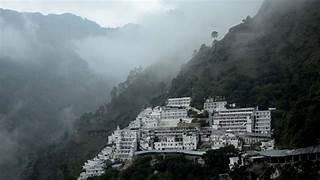
Once you complete your darshan at the Bhawan, your ultimate test awaits. The journey is incomplete without visiting the Bhairav Nath Temple, located at an altitude of 6,150 feet.
+------------------+-------------------------------------------------------+
| Attribute        | Bhawan to Bhairav Nath Temple Detail                  |
+------------------+-------------------------------------------------------+
| Distance         | ~1.5 km                                               |
| Incline Type     | Severe, near-vertical switchbacks & steep staircases  |
| Muscle Group     | Extreme load on calves and Achilles tendons           |
| Oxygen Feel      | Noticeably thin, cool air causing rapid fatigue        |
+------------------+-------------------------------------------------------+
The Ultimate Separator
This 1.5-kilometer stretch is widely considered the most brutal leg of the entire 25 km circuit. It is a near-vertical wall of concrete.
By this time, it is likely the early hours of the morning. Your body has already endured over 13 kilometers of uphill climbing, your feet are bruised from the hard pavement, and sleep deprivation is setting in. The air here feels distinctly thin and cold. Every single step requires a conscious effort of will.
Your calves will burn with a white-hot intensity as the angle of the slope forces your ankles into an extreme flex. There are no flat patches to catch your breath; it is a continuous, punishing upward grind.
This specific stretch is what separates casual tourists from true trekkers. The casual crowd frequently succumbs to exhaustion here, filling the sides of the path or opting for the ropeway (if operating). To finish this final climb on foot requires pure mental grit. When you finally reach the top and the wind from the Bhairav valley hits your face, the burning in your muscles transforms into a profound sense of accomplishment. You have conquered the mountain’s toughest gate.
Conquering the peaks is only half the battle. The journey back down to Katra—a grueling 11.5-kilometer descent—presents an entirely different set of physical and tactical challenges. As dawn breaks over the Trikuta Mountains, exhaustion sets in, and your strategy for the descent will dictate whether you walk away with a sense of triumph or a pair of ruined knees.
The Strategic Choice: Old Track vs. Tarakote Marg
When heading down from Adhkuwari to Katra, you are faced with a critical fork in the road. Your choice will completely alter the finale of your trek.
+-------------------+-----------------------------------+-----------------------------------+
| Feature           | The Traditional Track             | The Modern Tarakote Marg          |
+-------------------+-----------------------------------+-----------------------------------+
| Traffic           | Highly congested; shared with     | Strictly pedestrian-only;         |
|                   | ponies, palkis, and crowds        | no animals allowed                |
| Terrain & Hygiene | High impact; prone to animal      | Engineered smooth concrete;       |
|                   | waste and strong odors            | pristine and meticulously clean   |
| Atmosphere        | Chaotic, loud, and intense        | Serene, scenic, and peaceful      |
+-------------------+-----------------------------------+-----------------------------------+
The Biomechanics of the Descent: The Unexpected Toll
Many first-time trekkers assume going downhill is the “easy part.” In reality, a long mountain descent is far more damaging to the human body than the climb up.
When climbing, your cardiovascular system and major muscle groups (glutes, calves, and hamstrings) bear the burden. When descending, gravity shifts the entire mechanical load onto your skeletal framework and joints.
Downhill Impact Mechanics:
[Every Step] ➔ 3x to 4x Body Weight Impact ➔ Absorbed by Knees, Quads & Toes- The Knee Jar: With every downward step on the unforgiving concrete, your quadriceps must act as brakes. This continuous eccentric contraction places immense stress on the patella (kneecap) and knee joints, leading to a dull, burning ache known as “runner’s knee.”
- The Toe Smash: As your foot angles downward inside your shoe, your body weight repeatedly forces your toes forward into the toe box. By kilometer 20 of the circuit, this constant friction and pressure can cause severe blistering and painful bruised toenails.
Tactical Adjustment: Before beginning the descent, find a bench to tighten your shoelaces securely. Ensure your heel is locked into the back of the shoe to prevent your foot from sliding forward with every step.
Tarakote Marg: The Leg-Saving Strategy
To mitigate this physical toll, the ultimate tactical move is to divert onto Tarakote Marg for the final stretch back to the base camp. Opened to provide an alternative to the chaotic old track, this modern path is a sanctuary for exhausted trekkers.
1. A Pristine, Animal-Free Environment
Because ponies and mules are strictly banned from Tarakote Marg, the path is completely free of animal waste, slick surfaces, and the pungent smells that plague the traditional route. You can walk without the constant vigilance required to dodge oncoming animal traffic, allowing you to relax your posture and focus on a steady, rhythmic stride.
2. Superior Engineering
The gradient on Tarakote Marg is systematically engineered to be gentler and more winding than the old track. It avoids the sudden, jarring drops and steep steps that punish your joints. The concrete surface is smoother, significantly reducing the impact vibrated up through your ankles and knees.
3. Modern Fuel: Food Courts and Local Refreshments
The infrastructure along this route feels closer to a modern eco-park than a rugged mountain trail. The path features beautifully designed, clean food courts managed by the Shrine Board.
Instead of heavy, oily meals, you can refuel with refreshing, easily digestible local options:
- Chilled Lemonade & Shikanji: To immediately restore vital electrolytes lost to dehydration.
- Fresh Fruit Platters: Providing natural sugars for a quick energy spike.
- Light Snacks: Ensuring you stay fueled without feeling sluggish for the final kilometers.
By routing your descent through Tarakote Marg, you turn a painful, knee-buckling grind into a controlled, scenic walk. It is the smartest tactical decision you can make to preserve your joints, protect your feet, and finish the 25-kilometer circuit on your own two feet with a smile.
The Return: A Sanctuary of Mind and Body
As your boots finally level out onto the flat ground of the Katra base camp, a strange phenomenon occurs. The physical exhaustion is undeniable—your knees are locked, your muscles are spent, and your feet are bruised from 25 kilometers of unforgiving mountain concrete. Yet, underneath the heavy fatigue, your mind feels lighter than it has in years.
This is the exact point where a grueling physical trek transforms into something much deeper. It is the living embodiment of our blog’s new Lifestyle Philosophy: True growth only happens when you intentionally test your limits and cut out the noise.
The Anatomy of a Digital and Mental Reset
We live in a world of constant connection, fractured attention spans, and endless notifications. By forcing you to push through physical exhaustion while simultaneously demanding a total digital detox at the Bhawan, the Trikuta Mountain demands a price, but it pays back a massive dividend.
   [25 km Physical Toll]       +       [Strict Digital Detox]
(Endurance, Muscle Burn, Grit)          (No Phones, No Smartwatches)
                               │
                               ▼
[A Complete Systemic Reset]- The Physical Purge: When you are forced to focus entirely on the mechanics of your next step, your breathing, and your cadence, the superficial anxieties of daily life simply evaporate. Exhaustion becomes a form of meditation.
- The Digital Liberation: Depositing your phone into a locker for hours isn’t just a security requirement; it is a mental prison break. Without the urge to document, tweet, or text, your brain chemistry resets. You are forced to look outward at the sweeping mountain vistas, inward at your own resilience, and be entirely present in the moment.
Final Thoughts
You don’t leave Vaishno Devi the same person you arrived. You return with a quiet confidence, a body reminded of its own strength, and a mind cleared of modern clutter. If you can conquer this mountain on foot, you can conquer whatever waiting chaos lies back home.
When you are ready to trade comfort for a genuine transformation, remember that the map is already laid out for you, the path is illuminated, and the true test awaits. Everything you need to know to survive, respect, and conquer this journey is right here in The 25km Circuit: A Complete Guide Yes sometimes the distance can be slightly different from other sources but this is my personal experience.