
For decades, we have been told that the profile of a healthy individual can be distilled into two neat metrics: the Body Mass Index (BMI) and the ability to complete a 10k run in under sixty minutes. However, as we advance into May 2026, the scientific community is quietly initiating a revolution against these outdated benchmarks. We are finally moving beyond the purely appearance-based data of the early 2000s, striving to gain a deeper understanding of the underlying mechanisms behind longevity.
Enter Grip Strength.
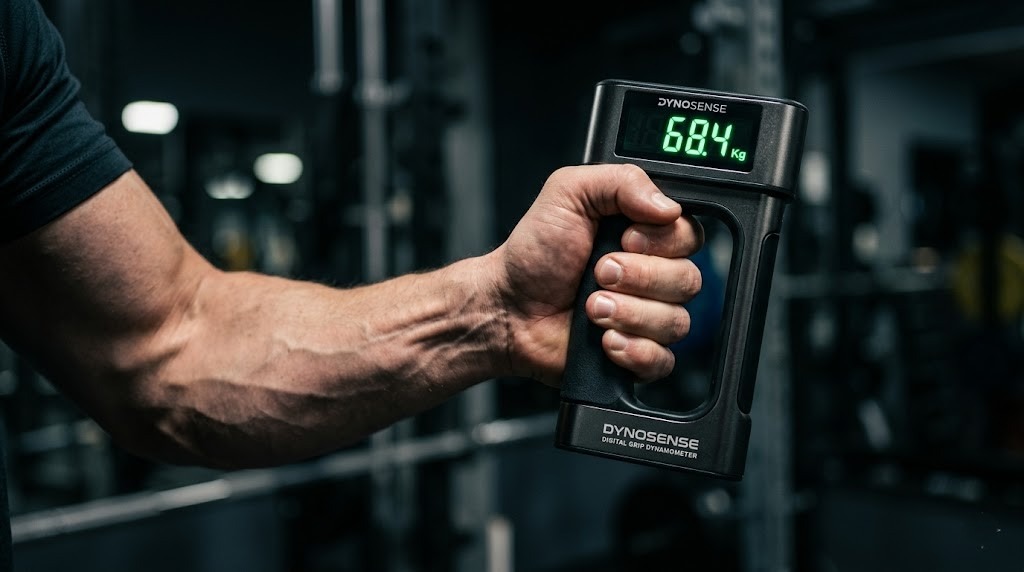
Forget the image of the ego-driven gym-goer crushing a gripper; it’s time to reframe your squeeze as a “biological barometer.” When you wrap your hand around a dynamometer, you aren’t just measuring forearm power—you are peering through a direct window into your systemic vitality. Recent clinical shifts have confirmed what the data has long whispered: your ability to exert force through your hands is a profound proxy for heart health, bone mineral density, and nervous system resilience.
It is the ultimate “check engine light” for the human body. A weak grip isn’t just about failing to open a jar; it’s often an early warning sign of underlying inflammation or neuromuscular decline. Conversely, a robust grip signals a body that is structurally sound and neurologically “plugged in.”
Think of your grip strength not as a fitness feat, but as the ultimate wealth for your future self. It is the currency you will spend to maintain your independence at eighty, the armor that protects your skeletal integrity, and the most honest audit of your biological age.
The Muscle-Brain Axis: Your Body’s Built-In Pharmacy
In the landscape of modern longevity, a paradigm shift has taken hold: “Neuro-Wellness.” This trend has moved past basic stress-management apps to focus on a profound biological truth: the muscular system and the central nervous system are locked in a continuous, bidirectional conversation.
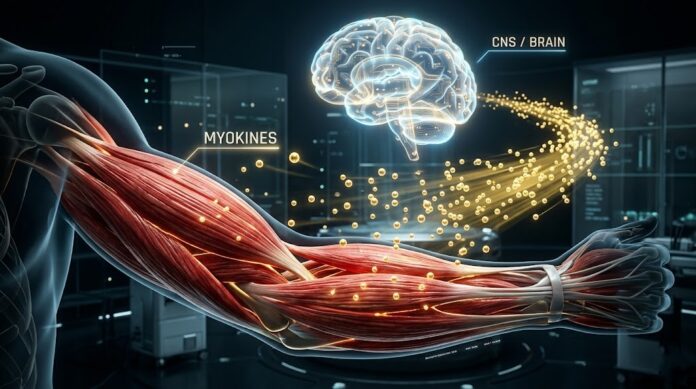
Historically, we viewed skeletal muscle merely as a pulley system for movement. Today, neuroscience recognizes muscle as our largest endocrine organ. When you contract your muscles against resistance—whether performing a heavy deadlift or squeezing a dynamometer—you aren’t just building physical tissue. You are activating an internal apothecary.
“Your muscles are a pharmacy, and exercise is the prescription.”
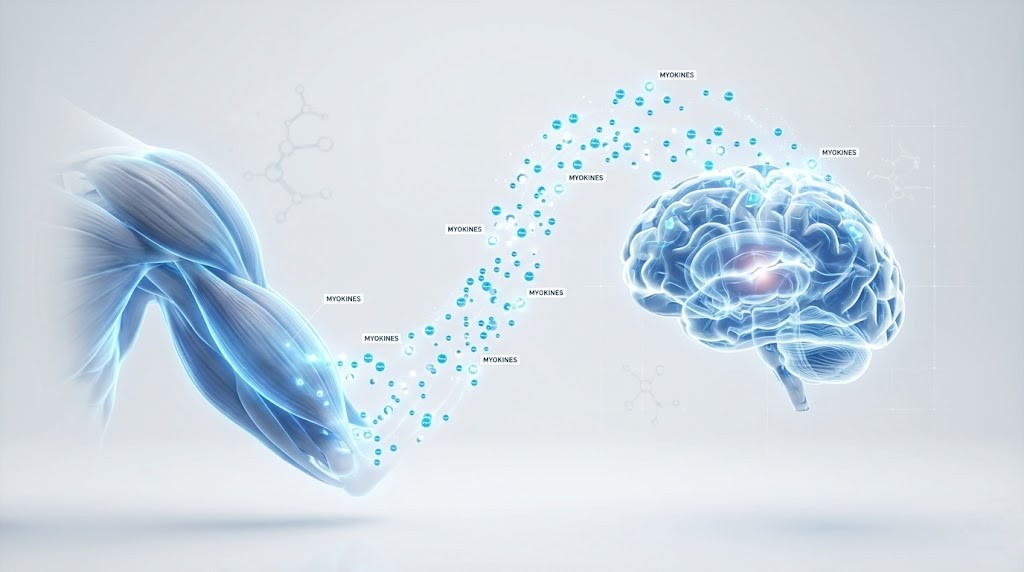
When muscle fibers contract, they manufacture and secrete specialized signaling peptides called myokines. In scientific circles, these are frequently referred to as “hope molecules” due to their profound antidepressant and neuroprotective effects. Unlike many compounds, these hope molecules have the unique molecular passport required to cross the protective blood-brain barrier.
Once inside the brain, myokines perform two critical functions:
- Extinguishing Neuro-inflammation: They actively suppress the low-grade systemic inflammation linked to cognitive decline, depression, and anxiety.
- Triggering BDNF: They stimulate the expression of Brain-Derived Neurotrophic Factor (BDNF)—essentially a fertilizer for your brain. BDNF promotes neurogenesis (the creation of new neurons) and strengthens synaptic plasticity, which directly enhances memory, learning, and emotional resilience.
This is where the power of your grip comes full circle. When you strengthen your grip, you aren’t just training your hands; you are literally “feeding” your brain. Every squeeze of a dynamometer or grip of a barbell acts as a direct neural input, sending a cascade of hope molecules upward to nourish your prefrontal cortex and hippocampus.
By prioritizing resistance training, you aren’t just fighting physical frailty—you are actively writing a daily prescription for a sharper, more resilient mind.
Testing Your Baseline and Building Future Proof Strength
To find where your biological baseline sits today, you need a standard handheld dynamometer. Sit comfortably with your elbow at a 90-degree angle, squeeze the device with maximum effort for three seconds, and record the number.
The 2026 global health standards define a “Healthy Squeeze” (the average baseline for your dominant hand) as follows:
| Age Group | Target for Men | Target for Women |
| 20–39 | 100 – 125 lbs (45–56 kg) | 60 – 75 lbs (27–34 kg) |
| 40–59 | 85 – 115 lbs (38–52 kg) | 55 – 70 lbs (25–32 kg) |
| 60+ | 75 – 95 lbs (34–43 kg) | 45 – 55 lbs (20–25 kg) |
If your numbers fall below these ranges, don’t worry. You don’t need a gym membership to build a resilient grip. You can easily fortify your baseline at home with these three functional movements:
1. The “Dead Hang” Challenge
Find a sturdy pull-up bar, a playground beam, or even a solid tree branch. Grab it with an overhand grip and simply hang with active shoulders (don’t let your ears sink into your shoulders).
- The Goal: Build up to a continuous 60-second hang. This builds structural shoulder health and absolute grip endurance.
2. The “Farmer’s Carry” (Everyday Edition)
Pick up two heavy, awkward household items—think gallon water jugs, loaded grocery bags, or suitcases filled with books. Stand tall, pull your shoulders back, and walk slowly in a straight line.
- The Goal: Carry the weight for 50 paces or for 1 minute straight. This directly mimics the demand of carrying a fully loaded backpack or heavy outdoor gear.
3. “Towel Wringing” for Forearm Endurance
Take a standard bath towel, soak it completely with water, and wring it out over a sink until it is bone-dry. Reverse the direction of your twist and repeat.
- The Goal: Perform this continuously for 2 minutes. This target-trains rotational wrist stability and the deep squeezing muscles of the fingers.
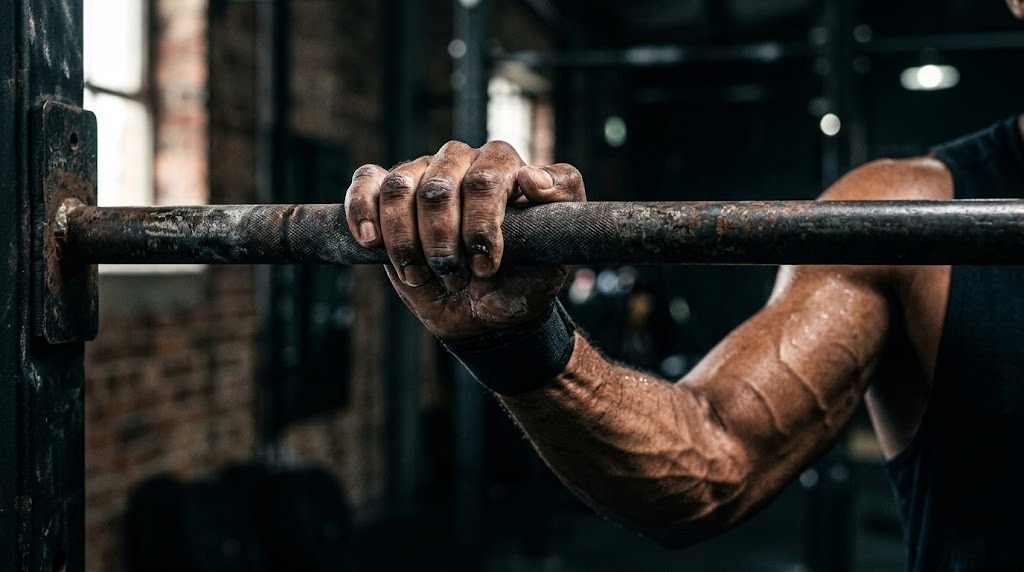
By weaving these quick challenges into your weekly routine, you are doing more than just hitting a metric on a screen. You are actively preserving your future independence. When you are eighty years old, you won’t care about your old 10k run times—but you will care deeply about having the strength to carry your own gear, lift your grandchildren, and open a stubborn jar without asking for help.
Bridging the Gap: Where Physical Power Meets Screenless Tech
The evolution of fitness tracking has undergone a massive paradigm shift. We have transitioned from the era of manual logbooks to the loud, wrist-bound notifications of early smartwatches. Today, in 2026, the vanguard of health optimization has gone quiet, elegant, and incredibly precise.
We are seeing a major rise in Screenless Wearables and Smart Rings. By stripping away distracting screens and blue-light disruptions, these ultra-compact devices maintain constant, high-fidelity contact with your skin. This allows them to capture research-grade biometrics—specifically Heart Rate Variability (HRV) and nocturnal resting heart rate—with clinical-level accuracy.
But what does this mean for your training? These rings utilize these metrics to passively monitor your central nervous system (CNS) fatigue.
Instead of guessing how recovered you are, your smart ring delivers a daily “Readiness Score.” It acts as a direct neural diagnostic, telling you exactly when your nervous system is fully primed to handle a heavy lifting session, or when a suppressed HRV signals that your body is fighting inflammation and needs an active recovery day. By pairing physical benchmarks like grip strength with the real-time neural data of screenless tech, you finally have a complete, high-tech map of your systemic health.
The Ultimate Squeeze on Longevity
At its core, longevity is not a distant destination or a static number on a scale; it is the sustained capacity to keep moving, exploring, and engaging with the world on your own terms. True physical wealth isn’t measured by how much space you take up, but by how actively you can occupy your own life.
Last month, while standing on a peak in Nainital and watching the sunrise over that silent sea of white clouds, I realized that my legs got me there, but my overall strength kept me steady. In 2026, we don’t build muscle for the beach; we build it for the view. We build it so that when we reach the peaks of our lives, we have the strength to hold onto the moment.
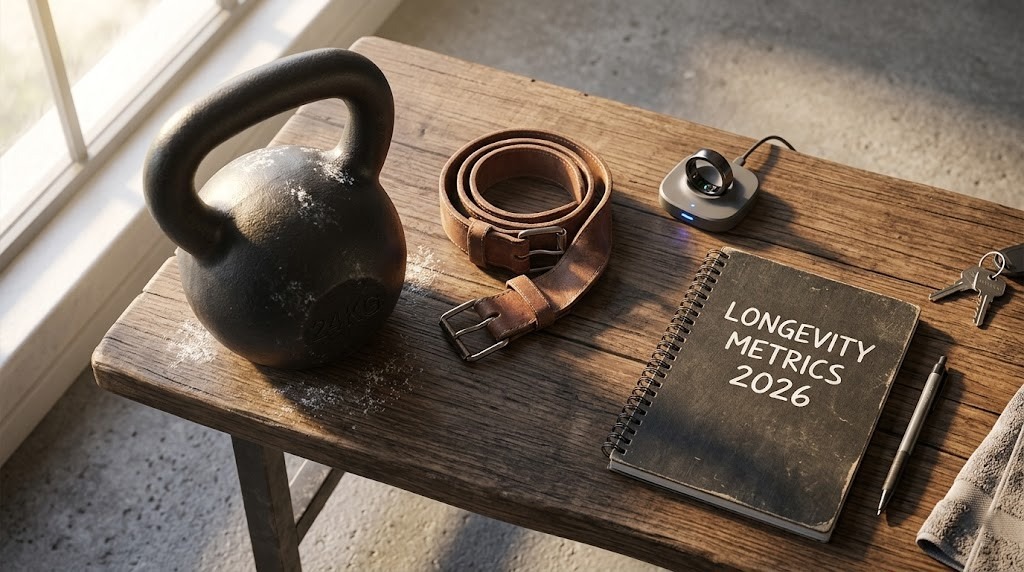
Your grip on a barbell today is your grip on a high-quality life tomorrow. Squeeze hard, train smart, and hold on tight to the journey ahead.