
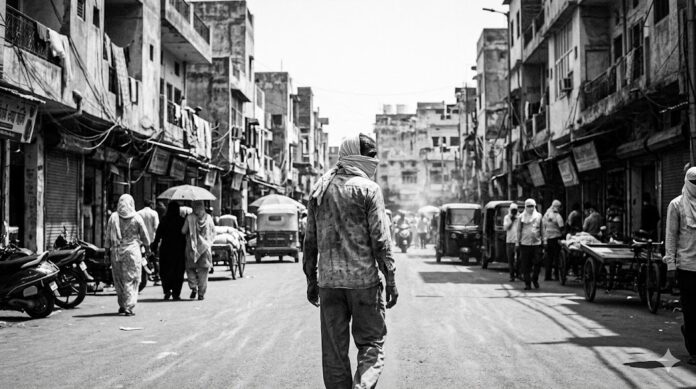
The air doesn’t just feel hot anymore; it feels personal. Stepping outside in May 2026 isn’t a transition of environments—it’s an physical assault. The morning breeze, usually a brief reprieve, has evaporated into a thick, suffocating wall of friction. This isn’t a normal summer; we are living through a collective, national sunburn.
The India Meteorological Department (IMD) numbers read like a fever dream, but they are brutally real. Down in Vidarbha, Brahmpuri has clocked a lethal 47.1C. Let that number sit on your skin for a second. Even the concrete jungle of Delhi is buckling under a sweltering 45C. This isn’t the kind of heat you “beat” with an iced latte; this is the kind of heat that warps the pavement and makes the air shimmer with menace.
Out on the streets, the loo—that infamous, searing desert wind—blows like a hair dryer held too close to your face, parching throats in seconds. It’s a quiet catastrophe. Stray dogs are pressed flat against shaded marble floors, too exhausted to bark, and birds are literally dropping from the trees, desperate for a single drop of water. Inside, urban life has shrunk to a frantic, collective obsession with the hum of the AC, praying the grid doesn’t collapse under our shared desperation for cold air.
We have officially crossed the line where talking about summer fashion or beach body routines feels utterly ridiculous. This is no longer casual lifestyle writing. This is a survival broadcast. When the ambient temperature matches your internal boiling point, lifestyle choices stop being about aesthetics and start being about logistics. It is time to scrap the urban weekend plans, pack a bag, and execute a hard pivot to a travel exit plan. Escape isn’t a luxury anymore; it’s a medical necessity.
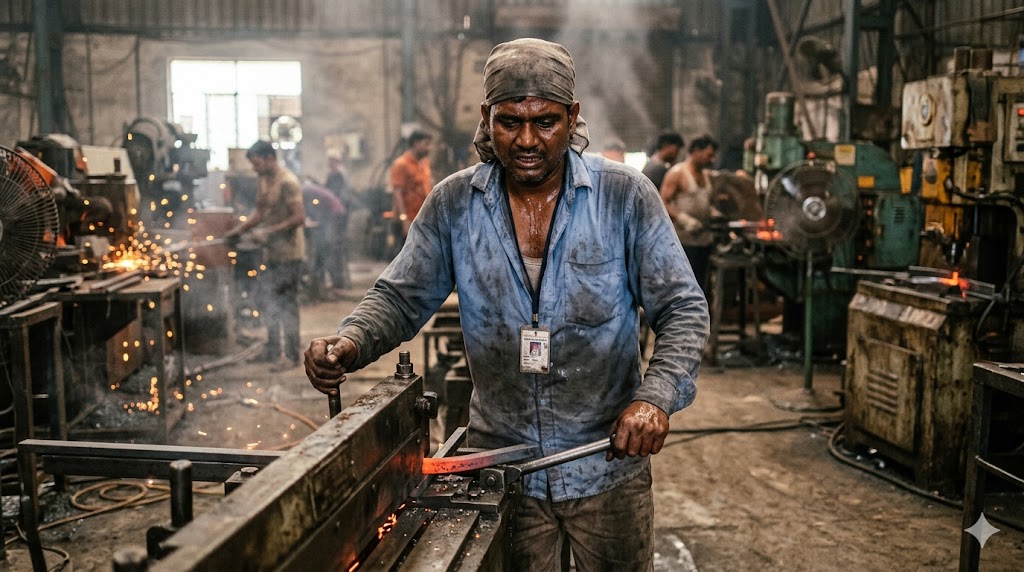
When the IMD issues a Yellow Alert, it isn’t a suggestion to drink more water—it is a final warning system for your internal organs. Underestimating a 45C ambient temperature is a fast track to a medical emergency.
Here is how your body breaks down, and the exact, non-negotiable blueprint to survive it.
The Biological Warning Signs: Exhaustion vs. Stroke
Your body cools itself via sweat evaporation. When the heat index spikes, that system fails. Understanding the transition from distress to danger is critical:
- Heat Exhaustion (The Warning): This manifests as heavy sweating, a rapid, weak pulse, muscle cramps, dizziness, headache, and intense nausea. Your skin will feel cold, pale, and clammy. This is your body screaming that its fluid and salt reserves are completely depleted.
- Heat Stroke (The Emergency): Once your core temperature hits 40C(104F), the sweating stops entirely. Your skin becomes hot, red, and bone-dry. Mental confusion, slurred speech, and fainting follow swiftly. This is a biological failure state; your organs are literally cooking, and it requires immediate emergency medical intervention.
The Un-Generic Survival Blueprint
To keep your body’s equilibrium intact, casual lifestyle habits won’t cut it. You need a tactical approach to the heat.
1. The Exact Hydration Math
Do not wait until you are thirsty; thirst means you are already 2% dehydrated.
- The Baseline: For every hour you spend outdoors or in non-air-conditioned spaces during a Yellow Alert, you must consume 1 liter of fluids.
- The Breakdown: Divide that liter. Drink 500 ml 30 minutes before stepping out, and consume 125–250 ml at strict 15-minute intervals while exposed.
2. Head Armor is Non-Negotiable
Covering your head isn’t about avoiding a sunburn; it is about protecting your brain’s thermostat. The hypothalamus, which regulates your body temperature, sits right at the base of your brain.
- Direct sunlight hitting an exposed scalp rapidly heats the blood traveling to your brain, accelerating heat stroke.
- Wear a wide-brimmed hat or a light-colored cotton scarf (gamcha) soaked in water. This creates a personal, evaporative micro-climate around your head.
3. Affordable Lifestyle Resets
Plain water isn’t enough when you are losing massive amounts of sodium and potassium through sweat. Chugging pure water can actually dilute your remaining electrolytes, leading to water intoxication. Use these two affordable powerhouses:
| Remedy | Why It Works | How to Use It |
| Oral Rehydration Salts (ORS) | The WHO-formula ORS has a precise ratio of glucose and sodium that forces your intestines to absorb water instantly, mimicking an IV drip. | Sip one 200 ml sachet dissolved in water for every 2 hours of heavy heat exposure. |
| Spiced Buttermilk (Chaas) | A natural isotonic drink packed with lactic acid, calcium, and potassium. The addition of rock salt and cumin aids digestion and instantly replenishes lost minerals. | Drink two glasses a day—one with breakfast and one at peak heat (2 PM)—to maintain your body’s pH balance. |
Survival Tip: Skip the ice-cold sodas and sugary energy drinks. Refined sugar hinders fluid absorption in the gut, making you more dehydrated in the long run. Stick to room-temperature or earthen-pot (matka) cooled liquids.
The Ultimate Escape Guide: The 2026 “Coolcation” Shift
The traditional summer getaway is dead. Commercial hill stations like Shimla and Manali, once safe havens, are now buckling under intense tourist traffic and soaring temperatures. In 2026, survival has given rise to a definitive travel trend: the “Coolcation.” This isn’t about casual sightseeing or checking off tourist hotspots; it is a tactical flight toward true, high-altitude isolation. It is about trading overcrowded malls for rugged landscapes where nature still dictates the climate, and where the ambient temperature drops significantly enough to let your body heal from the urban furnace.
The Gateway to Isolation: Crossing the Atal Tunnel
The transition from urban distress to alpine relief is sudden, dramatic, and nothing short of miraculous. As you leave the heat-trapping valleys of lower Himachal behind and enter the south portal of the Atal Tunnel, you are effectively leaving the summer behind.
Inside the 9.02-kilometer engineering marvel, the heavy, air-conditioned air of your vehicle becomes redundant. The real magic happens at the north portal. As you emerge into the daylight at Dhundi, the change is instantaneous:
- The Thermal Drop: You watch the dashboard thermometer plummet from a stifling 40C down to a crisp, single-digit mountain breeze.
- The Atmosphere: The suffocating dust of the plains is instantly replaced by the sharp, thin, and undeniably cold scent of pine and crushed glaciers.
- The Horizon: The brown, hazy ridges of the lower Himalayas vanish, replaced by the stark, towering, snow-dusted peaks of the Pir Panjal range. Your lungs expand fully for the first time in months.
Experiential Guide: Sissu and the Lahaul Valley
Stepping out into Sissu, the gateway to the Lahaul Valley, feels like stepping onto another planet. Situated at an altitude of over 3,100meters (10,200feet), this region remains remarkably pristine, preserved by its geographic isolation.
[Plain Valley: 40°C, Dusty, Humid]
       └──> [Atal Tunnel: 9.02 km Transition]
                 └──> [Lahaul Valley: 9°C, Alpine Breeze, Snow Peaks]
What to Experience
- The Sissu Waterfall: Fed directly by glaciers, the waterfall cascades down a sheer cliff face opposite the village. The mist blowing off the falls doesn’t just cool the air—it carries a freezing spray that requires a heavy fleece or windbreaker, even in late May.
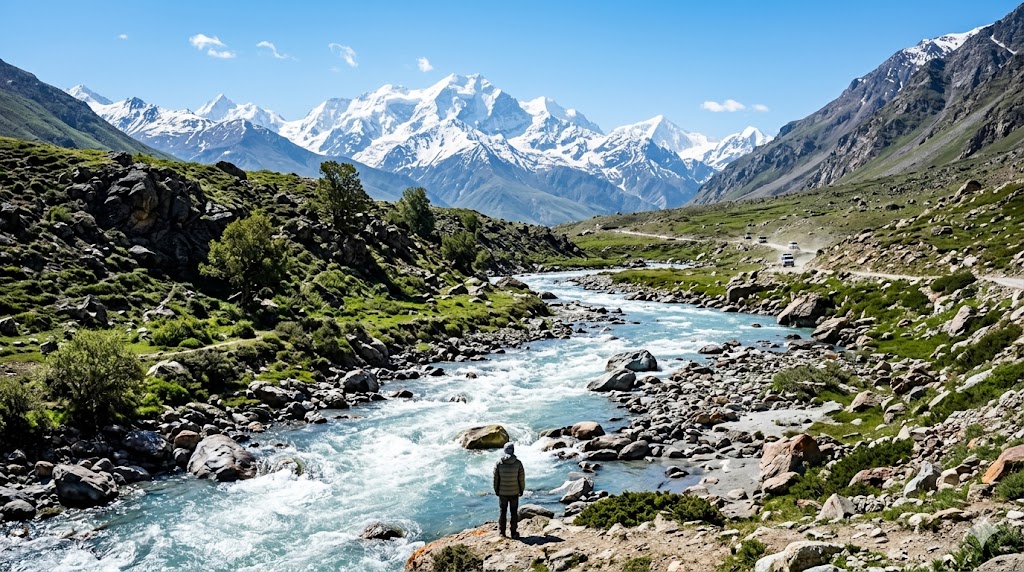
- The Changing Landscape: Unlike the lush, humid green of the Kullu Valley, Lahaul offers a stark, high-altitude desert beauty. Deep green patches of potato and barley fields slice through massive, rugged scree slopes, all framed by an impossibly blue, unpolluted sky.
- True High-Altitude Isolation: Move beyond Sissu toward the smaller hamlets of Gondhla or Jispa. Here, the commercial noise fades to absolute zero. There are no crowded markets or loud traffic snarls—only the roar of the turquoise Chandra River cutting through the valley floor and the whistling of the cold Himalayan wind.
The Reality Reset
In Lahaul, your daily logistics revolve around layering up rather than staying hydrated. Sunscreen is still mandatory due to the intense UV rays at high altitudes, but the heat no longer threatens your well-being. At night, the temperature frequently dips close to freezing, forcing you under heavy quilts. It is the ultimate antidote to a blistering May—a place where you can finally watch the sun setting behind snow-covered peaks without fearing the air it leaves behind.
Managing your physical health during extreme weather and knowing when to seek a mental reset in the silent mountains is the ultimate modern lifestyle skill.
True luxury in 2026 is no longer defined by what we consume, but by how effectively we protect our well-being. When the environment outside becomes hostile, lifestyle writing must evolve from a catalog of trends into a blueprint for resilience. Adapting your daily routines, mastering your body’s hydration math, and recognizing the exact moment to trade urban chaos for alpine isolation isn’t just smart travel—it is a fundamental survival strategy.
As we navigate this unforgiving season, remember that your health is your primary sanctuary. Stay safe, stay hydrated, and take control of your environment with The Severe Heatwave: Survival Guide 2026.