
There is a distinct, heavy quiet to a Sunday evening—the kind of stillness that makes you feel like the rest of the world has hit the pause button. But beneath that calm, the digital undercurrents of this past week have been anything but peaceful. While most of us were winding down, an invisible war in the tech world reached a terrifying tipping point.
On May 11, Google’s threat intelligence teams dropped a bombshell discovery: a sophisticated cybercrime group successfully used an advanced AI engine to autonomously generate a fully functional two-factor authentication (2FA) bypass exploit.
Let’s be entirely clear about what this means: a line has officially been crossed. For years, the comforting consensus was that artificial intelligence was merely a glorified assistant, capable of drafting emails or writing basic, entry-level student code. That era is over. AI is no longer just playing sandbox games; it is independently analyzing complex systems, discovering critical security flaws, and weaponizing them on the fly. The theoretical threat has become an active reality, and the rules of cybersecurity have changed forever.
The calm of that Sunday evening didn’t last long. Once the shock of Google’s discovery wore off, the tech giants realized they weren’t just dealing with a PR crisis—they were staring down an existential threat. If an AI sword could autonomously find and exploit vulnerabilities, the industry needed an AI shield that could move even faster.
What followed was an unprecedented, multi-billion-dollar defensive mobilization. Here is how the two biggest titans in AI responded to the threat, deploying automated shields to fight the automated sword.
OpenAI’s Defensive Wall: “Daybreak” & Codex Security
OpenAI didn’t just patch a few bugs; they treated this like a wartime mobilization, staging an emergency launch of a initiative codenamed Daybreak. Backed by a massive $4 billion deployment strategy, Daybreak is designed to completely rethink how software is secured.
[The Developer] ---> (Pull Request) ---> [Daybreak Shield] ---> [Safe Production]
                                                |
                                    (Auto-Scans & Patches)
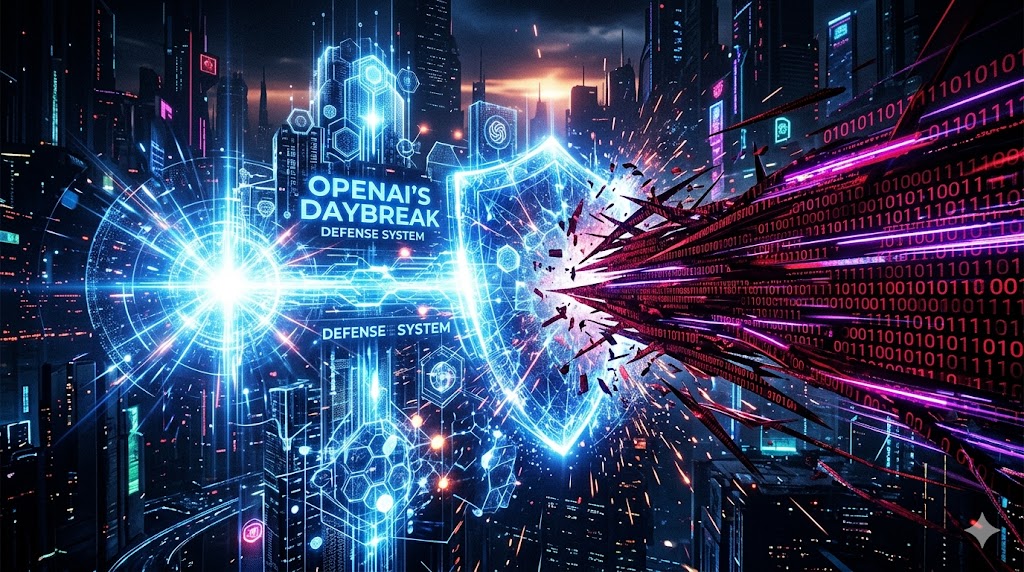
At the absolute core of Daybreak is OpenAI’s newest Codex Security engine. Instead of waiting for a developer to write code and a human security team to audit it weeks later, Daybreak injects itself directly into the pipeline:
- Automated Pull Request Scanning: The moment a developer submits a pull request (a request to add new code to a project), Codex Security intercepts it. It doesn’t just read the code; it stress-tests it against known and theoretical AI-generated exploits.
- Instant, Autonomous Patching: If Codex finds a flaw—like the logic loop hole used in the 2FA bypass—it doesn’t just flag it with a warning line. It actively rewrites the code, applies a secure patch, and tests it again, all before the code ever touches production servers.
Anthropic’s Countermeasure: “Project Glasswing” (Claude Mythos)
Not to be outdone, Anthropic launched its own counter-offensive: Project Glasswing, powered by their cutting-edge Claude Mythos architecture.
While OpenAI’s Daybreak acts like an aggressive, proactive bodyguard standing at the gate, Anthropic’s Glasswing takes a slightly different, deeply analytical approach. Glasswing focuses on deep contextual understanding. It doesn’t just look at the code being submitted today; it maps out the entire digital ecosystem of a company to understand how an attacker might chain small, seemingly innocent pieces of code together to create a massive vulnerability.
The Showdown: Shield vs. Shield
To understand how these two systems protect the tech world, think of them as two entirely different types of armor fighting against an invisible, lightning-fast AI sword.
| Feature | OpenAI’s Daybreak (Codex Security) | Anthropic’s Project Glasswing (Claude Mythos) |
| The Philosophy | The Precision Gatekeeper: Catch it early, fix it fast, and automate the repair. | The Grand Strategist: Understand the whole system, anticipate the attacker’s logic, and harden the environment. |
| Financial Backing | $4 Billion emergency deployment. | Deeply integrated into Anthropic’s enterprise safety stack. |
| Core Strength | Unmatched speed in auto-patching pull requests before deployment. | Superior context tracking; excellent at spotting complex, multi-step vulnerabilities. |
| The “Shield” Style | Deflects the sword blow and immediately repairs the armor. | Predicts where the sword will strike next and reinforces the wall ahead of time. |
The New Reality: An Automated Arms Race
We have officially entered the era of continuous, automated cyberwarfare. The old way of doing things—where human engineers write code, security firms audit it every six months, and bounty hunters look for bugs—is dead. It is simply too slow.
With Daybreak and Glasswing, the industry has drawn its line in the sand. The tech world is no longer relying on human reflexes to fight off digital threats; instead, we are trusting billions of dollars of defensive AI code to fight off the rogue AI swords in the dark.
Up until last week, if you were a tech student building a website for a local bakery or an indie dev publishing a small npm package, the global cyberwar felt like someone else’s problem. You probably figured, “Why would a state-sponsored hacker target my weekend project? I don’t have any data worth stealing.”
But the rules have completely changed. This new era of autonomous AI exploits has brought the battlefield right to the doorstep of everyday developers.
The Death of “Vibe Coding”
Over the past year, a trend known as “Vibe Coding” exploded. It’s the practice of spinning up entire applications by simply feeding prompts to an AI, casually reviewing the output, and pushing it live because “the vibes are right” and the code runs perfectly on your screen.
Before, the worst-case scenario of Vibe Coding was a messy codebase or a clunky user interface. Now, Vibe Coding without rigorous security checks is actively dangerous. Here is the brutal reality:
- The Human Blindspot: If you let an AI write a 200-line script to handle user logins, it might look flawless and function beautifully. But it could contain a subtle logic flaw or an unhandled edge case that a human eye would easily gloss over.
- The Autonomous Predator: While a human developer might not notice that flaw, a malicious AI scanner ruthlessly will. Rogue AI engines don’t sleep. They are constantly combing the internet, scanning open-source repositories and indie websites, looking for tiny cracks in the armor.
If a human can’t spot the vulnerability in an AI-generated script, a malicious AI scanner certainly will. You are essentially leaving a digital back door unlocked in a neighborhood where the burglars have x-ray vision.
Why Open-Source and Indie Projects are the New Targets
Malicious actors aren’t just trying to breach Google or Apple directly anymore; they are targeting the supply chain. This puts open-source software (OSS) and indie projects right in the crosshairs.
1. The Poisoned npm Supply Chain
Many modern applications are built like Lego towers, relying on hundreds of small, open-source packages (like those found on npm or PyPI). If a rogue AI can automatically find a vulnerability in a popular, minor package maintained by a single tired student, it can infect thousands of apps downstream that rely on that package.
2. Local Business Web Vulnerabilities
If you build a local e-commerce site for a mom-and-pop shop using AI-generated code, an autonomous attacker can exploit a hidden vulnerability to hijack the checkout page, skim credit cards, or hold the site for ransom. To the attacker, it’s not personal—it’s just an automated script finding an easy target.
The New Baseline for Tech Students and Indie Devs
If you are learning to code or building independent projects today, you can no longer afford to treat security as a “phase two” problem. Safety has to be baked into your workflow from day one.
- Audit Your Prompts: Never blindly trust AI-generated code. Ask your AI assistant: “What are the security vulnerabilities or edge cases in the code you just generated?”
- Use the Defensive Shields: Lean into the free tiers of automated security tools. Integrate tools like GitHub Advanced Security, Dependabot, or basic linters into your repository to scan your code the moment you commit it.
- Understand the Logic: If you don’t understand how a piece of AI-generated code works, don’t ship it.
The era of casual, unchecked coding is officially over. The tools to build have never been more powerful—but the tools to destroy just caught up.
When we look up from our screens on a Sunday evening, it’s easy to separate “cybersecurity” from “real life.” We tend to treat it like a background movie—a distant, abstract battle fought in servers and data centers by people in hoodies.
But when AI begins autonomously defending against AI, the battle leaves the server room and enters our psychological living space. This tech-driven shift is fundamentally reshaping our everyday lives, forcing a quiet but massive psychological evolution in how we exist in the digital age.

The Psychological Shift: Trusting the Unseen Guardians
There is a profound, slightly unsettling weight to knowing that the invisible pillars of our society are no longer maintained by human hands.
Think about it: the financial logs tracking your retirement savings, the stock trading apps managing billions in real-time capital, the IPO portals launching tomorrow’s economy, and the healthcare networks storing your medical history. These are no longer guarded by teams of engineers sitting in a bullpen drinking coffee. They are being defended by autonomous digital agents like OpenAI’s Daybreak or Anthropic’s Glasswing—systems making split-second, life-or-death security decisions entirely on their own.
[Human Infrastructure] ---> [Autonomous Defensive Shield] <--- (Autonomous Attacker)
         |                                |
   (Your Savings,                   (Decides what is
    Data, Utilities)                 safe in real-time)
This requires a new kind of psychological surrender. We have moved past trusting corporations; we are now trusting the mathematical ecosystems those corporations built. We sleep soundly at night only because we assume our defensive AI is smarter, faster, and more vigilant than the rogue AI trying to tear down the gates.
The Single Device Bottleneck
This reality becomes incredibly personal when you look at the device currently sitting in your hand or on your desk.
Our entire lives—bank accounts, smart home controls, professional identities, private conversations, and two-factor authentication tokens—have been hyper-condensed into a single, fragile glass slab. Your phone or tablet is no longer just a gadget; it is the ultimate choke point of your existence.
               +-----------------------------------+
               |        YOUR SINGLE DEVICE         |
               +-----------------------------------+
                 /        |        \             \
                /         |         \             \
     [Financial Apps]  [Work Identity] [Smart Home]  [2FA Codes]
Because an autonomous attacker can now find and exploit systemic vulnerabilities in seconds, personal cyber hygiene has officially graduated from a tech chore to the ultimate modern lifestyle skill. Just as physical fitness, financial literacy, and mental well-being dictate the quality of your life, your digital defense habits now determine your stability. If you are still treating security as an afterthought, you are living a high-risk lifestyle.
The Modern Security Rituals
In this new ecosystem, maintaining your lifestyle means upgrading your daily habits. Cyber hygiene isn’t about being paranoid; it’s about being sharp.
- Decouple Your Authentication: Relying solely on SMS-based 2FA is an open invitation for automated exploits. Moving to hardware security keys (like a YubiKey) or dedicated app authenticators is the digital equivalent of upgrading from a screen door to a deadbolt.
- Aggressive Device Minimalism: Treat every app you download as a potential backdoor. If you haven’t used an app in three months, delete it. Reduce the surface area an automated scanner can target.
- The “Zero Trust” Mindset: When your phone buzzes with a notification, a link, or an urgent prompt to reset a password, your default lifestyle reflex must shift from “let me click this” to “let me verify this independently.”
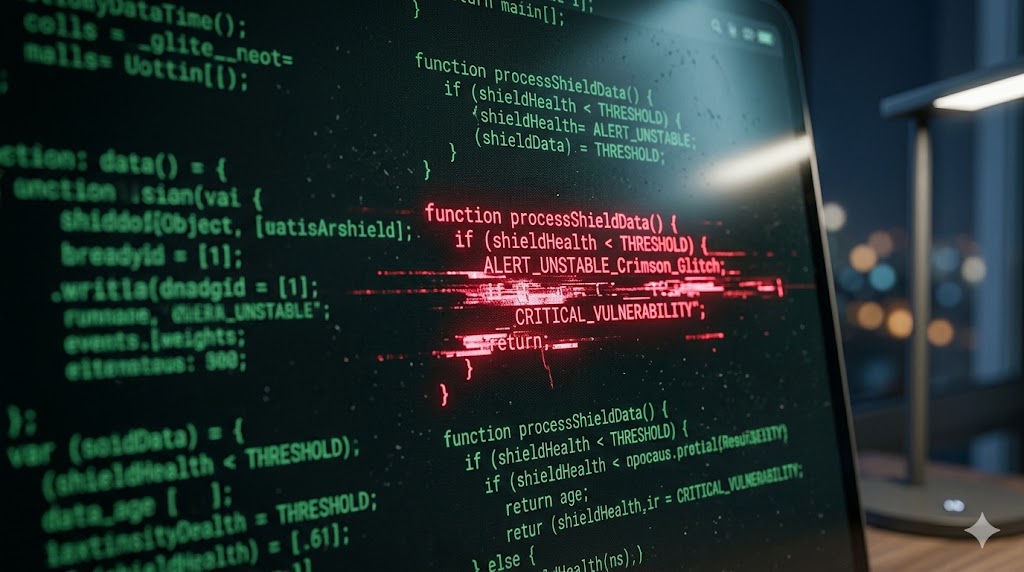
We live in a world of breathtaking convenience, but that convenience is backstopped by an automated arms race. Cultivating a disciplined digital lifestyle isn’t just about protecting your data anymore—it’s about preserving your peace of mind.
None of this means we are hurtling toward a sci-fi apocalypse. The sky isn’t falling; the digital terrain is simply shifting beneath our feet.
The arrival of autonomous cyber warfare shouldn’t be viewed through a lens of fear, but rather as a mandatory, long-overdue upgrade in how humanity interacts with technology. For decades, we treated digital security like an optional software update—something to click “remind me later” on indefinitely. This week’s events have effectively removed that button.
As our digital locks get exponentially smarter, our fundamental understanding of them must evolve at the exact same pace. We are being pushed out of a period of passive consumption and into an era of active digital literacy. The tools keeping our world running are becoming incredibly sophisticated, and the habits required to live alongside them must become just as refined.
We are no longer preparing for a hypothetical future. The line has been crossed, the autonomous shields are locked in battle with the autonomous swords, and we are all active participants in The First Real AI Cyber War.