


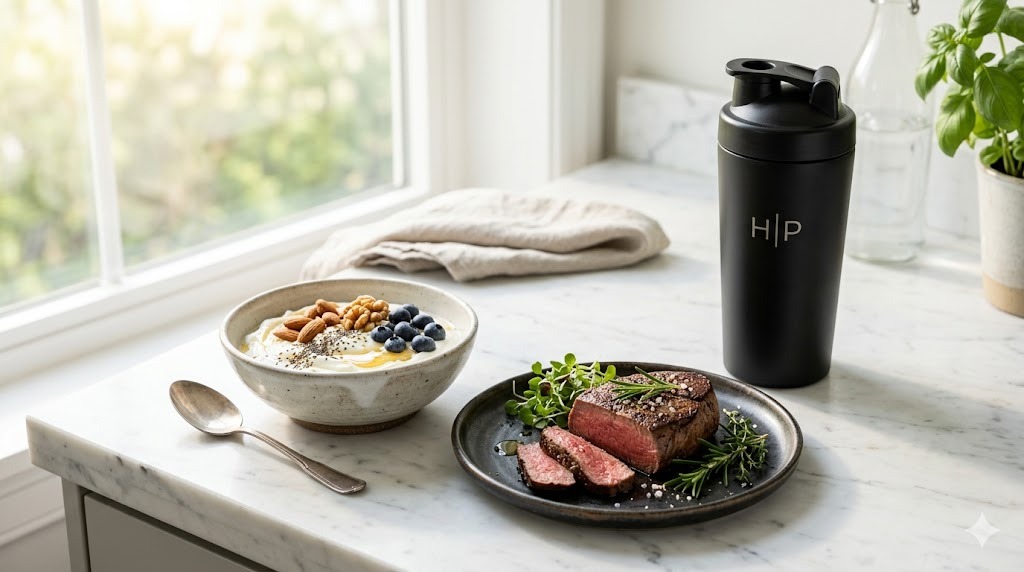
The Global Rise of Protein-Maxxing: Why 2026 is the Year of the Amino Acid
In 2026, the global health landscape has undergone a seismic shift. We have moved past the era of calorie-counting and entered the age of “Protein-Maxxing.” What was once a niche subculture of bodybuilders and elite athletes has officially hit the mainstream. Walk into any grocery store from New York to New Delhi, and you’ll find “High-Protein” labels on everything from coffee to cookies.
But this isn’t just another fitness fad. The protein-maxxing movement represents a fundamental pivot in how we view human longevity, metabolic health, and the very architecture of our bodies.
Beyond the Shaker: Protein as a Longevity Strategy
For decades, protein was synonymous with “getting big.” If you weren’t hitting the bench press, you didn’t think twice about your leucine intake. That changed in 2026. Today, protein-maxxing is recognized as the ultimate insurance policy against Sarcopenia—the age-related loss of muscle mass and strength.
Muscle is more than just aesthetic; it is an endocrine organ and a metabolic sink for glucose. As the global population ages, the medical community has rebranded muscle as the “organ of longevity.” We now understand that losing muscle isn’t just a byproduct of aging—it’s a primary driver of metabolic decline. By hitting aggressive protein targets, individuals are effectively “armor-plating” their bodies against the frailty that once seemed inevitable in later life.
The 1.6g Rule: Moving from “Survival” to “Thriving”
The most significant scientific shift of 2026 is the death of the old Recommended Dietary Allowance (RDA). For years, the standard guideline was roughly 0.8g of protein per kilogram of body weight.
The consensus now is clear: 0.8g/kg is the survival minimum—the amount required to prevent literal malnutrition. For those looking to thrive, optimize cognitive function, and maintain a lean physique, the numbers have shifted upward.
The 2026 Daily Protein Goal Table
The following benchmarks are now the gold standard for daily intake based on activity level:
| Activity Level | Protein Goal (per kg of body weight) | Primary Objective |
| Sedentary / Baseline | 1.2g | Prevent Sarcopenia & Maintain Metabolism |
| Moderate (3-4x/week exercise) | 1.4g | Tissue Repair & Lean Body Mass |
| High Performance / Athlete | 1.6g – 2.2g | Hypertrophy & Peak Recovery |
Animal vs. Plant: The Bioavailability Battle
The debate over protein sources has evolved. While the “Animal vs. Plant” war continues, 2026 has introduced a third contender that is changing the game.
The Classics: Whey and Beef
Animal proteins remain the gold standard for bioavailability. Whey protein isolate and lean beef contain a complete profile of Essential Amino Acids (EAAs), particularly Leucine, which acts as the “on switch” for Muscle Protein Synthesis (MPS). For maximum efficiency per gram, animal sources are still the most direct route to hitting your 1.6g goal.
The New Frontier: Precision Fermented Vegan Proteins
The 2026 “Green Revolution” isn’t about soy or pea protein anymore; it’s about Precision Fermentation. Using micro-organisms to “brew” identical milk or collagen proteins without the cow, these vegan-friendly options offer the high bioavailability of animal protein with the environmental footprint of plants. This has bridged the gap for plant-based protein-maxxers who previously struggled with the lower absorption rates of traditional legumes.
The Fiber-Maxxing Rivalry: The Necessary Partner
As protein-maxxing peaked, a side effect emerged: the “Protein Bloat.” This led to the secondary trend of Fiber-maxxing. In 2026, the two are no longer rivals but partners.
High-protein diets can be taxing on the gut microbiome if not balanced with diverse plant fibers. The “1.6g Rule” for protein is now frequently paired with the “30g Rule” for fiber. Fiber acts as the broom for the digestive system and provides the necessary prebiotics to ensure that your gut bacteria can handle the increased nitrogen load from a high-protein lifestyle. If you aren’t fiber-maxxing, you aren’t truly protein-maxxing.
Practical Guide: How to Hit 150g Without the Bloat
Hitting 150g of protein sounds daunting, but in 2026, it’s a matter of strategic distribution rather than sheer volume.
1. The “30-40-30” Rule
Don’t try to eat 100g in one sitting. Your body can only utilize so much for MPS at once. Aim for 30g to 50g per meal across 3–4 meals. This keeps your amino acid levels elevated throughout the day.
2. Front-load Your Day
Most people under-eat protein at breakfast. By hitting 40g before noon (think Greek yogurt, egg whites, or a high-quality shake), the rest of the day becomes an easy downhill climb.
3. Supplement Smartly
Use hydrolyzed whey or precision-fermented isolates for post-workout recovery. These are pre-digested to a degree, meaning they hit your bloodstream faster and reduce the “heavy” feeling in your stomach.
4. Hydrate and Enzyme
Drink significantly more water than you think you need. Consider a digestive enzyme containing protease if you are transitioning from a low-protein diet to a high-protein one; it helps your stomach break down the peptide bonds more efficiently.
FAQ: Your 2026 Protein Questions Answered
Q: Is too much protein bad for my kidneys?
A: For healthy individuals, the 2026 scientific consensus is a firm “No.” High protein intake does not damage healthy kidneys. However, if you have pre-existing kidney disease, you should always consult your doctor before making drastic dietary changes.
Q: Can I get all my protein from shakes?
A: You could, but you shouldn’t. Whole foods provide micronutrients, zinc, B12, and iron that shakes lack. Aim for a 70/30 split between whole food sources and supplements.
Q: Does “Protein-Maxxing” make you gain weight?
A: Protein has a higher Thermic Effect of Food (TEF) than carbs or fats, meaning your body burns more calories just digesting it. It is also the most satiating macronutrient. Most people find that protein-maxxing actually leads to “recomposition”—losing fat while maintaining or gaining muscle.
Q: I’m a vegetarian; is 1.6g/kg possible?
A: Absolutely. With the rise of precision-fermented eggs and high-leucine plant blends in 2026, reaching elite protein targets as a vegetarian has never been easier or more delicious.
Conclusion
Protein-maxxing is more than a trend; it is a shift toward a more resilient, capable humanity. Whether you are a Gen Z “vibe-coder” looking for mental clarity or a 60-year-old looking to stay active, the message of 2026 is simple: Prioritize protein, protect your muscle, and thrive.
“Look, hitting these numbers can feel like a full-time job at first. I’ve been there—staring at a chicken breast at 10 PM wondering if it’s worth it. But once you feel that shift in your energy and recovery, you won’t want to go back. Don’t stress about being perfect today; just try to add one extra protein source to your next meal. Your future self will thank you for the muscle.”